The federal government is moving forward with marijuana rescheduling and MSOs are excited, despite persistent opposition from conservative lawmakers and prohibitionist groups.
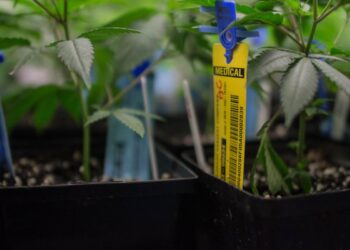
Under President Donald Trump’s order, medical cannabis is officially a Schedule III drug, which opens a lot of financial and regulatory doors, but questions remain about how the move may or may not impact adult-use cannabis markets. The change also brings a new requirement for medical operators to register with the Drug Enforcement Agency.
“As medical represents approximately 50% of our business, we are encouraged by the recent movement in the rescheduling process,” said Green Thumb Industries (GTI) Founder and CEO Ben Kovlar during the company’s May 6 quarterly earnings call. During that same call, Kovlar noted GTI filed an application with the DEA in the prior week.
The DEA officially opened its application window for medical cannabis dispensaries to register with the federal government on April 29. The window will remain open until June 26.
Registration includes an annual payment of $794 in application fees. Under the expedited process, operators will be permitted to continue operating under their state medical cannabis license while their registration is under review. Operators would lose that safe harbor protection if they wait until after the 60-day window to file, because they would effectively be back in violation of the Controlled Substances Act on June 27 regardless of the state legal status.
The timing of the application window has it closing on the last business day before the Department of Justice holds a formal public hearing to reschedule marijuana, set to begin on June 29.
Prohibitionists, states file lawsuits
With the long-awaited hearing looming, prohibitionist efforts have taken to the courts to push back.

Smart Approaches to Marijuana (SAM) and the National Drug and Alcohol Screening Association filed a petition on May 4 with the U.S. Court of Appeals for the District of Columbia. The petition seeks a reversal of the DOJ’s rescheduling order. The plaintiffs claim the immediate rescheduling of medical cannabis and the upcoming hearing to consider further rescheduling violate the rulemaking requirements under the Administrative Procedures Act.
Attorneys General from Nebraska, Indiana and Louisiana joined that effort when they filed their own joint petition on May 22, which was consolidated into SAM’s case.
“We welcome these legal challenges brought by the attorneys general, who are taking bold action to stop this illegal order,” said SAM CEO Kevin A. Sabet, in a statement released May 28 after the cases were consolidated.
The next day, Louisiana Attorney General Liz Murrill filed a new petition to pull her state out of the lawsuit but has not yet publicly stated a reason for the move.
A third lawsuit challenging the hearings was filed May 28 by New Directions Addictions Recovery Services, Cannabis Industry Victims Educating Litigators, MMJ International Holdings, MMJ Biopharma Cultivation Inc., MMJ Biopharma Labs Inc. and two individual physicians, Kenneth Finn and Elizabeth Stuyt.
This suit, which was consolidated into the two prior ones, makes a case that the parties will be harmed by rescheduling. Specifically, the two advocacy groups will be harmed because their work will be undermined by what they describe as the government’s implied approval of cannabis, the two physicians say they will be forced to prescribe cannabis despite their personal opposition to it, and the pharmaceutical companies claim it will unfairly benefit state-legal operators and undermine their own efforts to develop THC-derived medications under the old scheduling for medical cannabis.
Petitioner procedural motions are due in court June 12.
MSOs quick to submit DEA applications, re-domicile
Despite the opposition to rescheduling, multi-state operators (MSOs) were quick to submit their applications to the DEA, with some moving toward re-domestication to the U.S.
Among others, Trulieve Cannabis Corp., Verano Holdings Corp., Green Thumb Industries and Glass House Brands all announced that they had either already filed with the DEA or planned to do so shortly during their recent first quarter earnings calls.
“With rescheduling and our applications for DEA registration, we are hopeful that pharmacies may again dispense medical cannabis products in the future,” said CEO Kim Rivers during Trulieve’s May 7 quarterly earnings call. “We believe that rescheduling is the first major domino to fall, paving the way for broader reform efforts.”
Glass House Brands, a California-based cannabis producer, sees rescheduling as a means to potentially export its product domestically and possibly overseas.
“We are confident that medical cannabis rescheduling is sufficient to support interstate commerce between companies with the appropriately registered DEA licenses and export,” said Kyle Kazan, co-founder and chairman of Glass House Brands, during the company’s May 13 earnings call. “This permits our team to ship low-cost, sought-after California cannabis to compliant medical markets outside the state and country.”
Aside from DEA registration, Trulieve announced May 13 that it proposed a plan to domesticate the company. Much like other major cannabis companies that operate in the U.S., Trulieve is actually based in Canada. The proposed move would shift their base from British Columbia to Delaware.
The company will hold a special shareholder meeting on Aug. 5 to vote on the proposal.
Most MSOs are incorporated in Canada, where that nation’s federal laws allow cannabis companies to list on Canadian stock exchanges. With rescheduling, MSOs are getting closer to that same access in the United States.
Verano also announced a plan to re-domicile following a Sept. 15, 2025, vote of approval from its own board. The move relocated Verano’s base of operations from British Columbia to Nevada.